
The “invisible hero” in compressed air systems! Why is an air receiver a must-have?
In industrial production or pneumatic tool applications, the compressed air system is the “power heart” for many scenarios. But there’s a key component often overlooked — the air receiver — which directly determines the system’s efficiency, lifespan, and safety. Today, let’s break down: What exactly is an air receiver? Why is it necessary? And how to choose and maintain it?
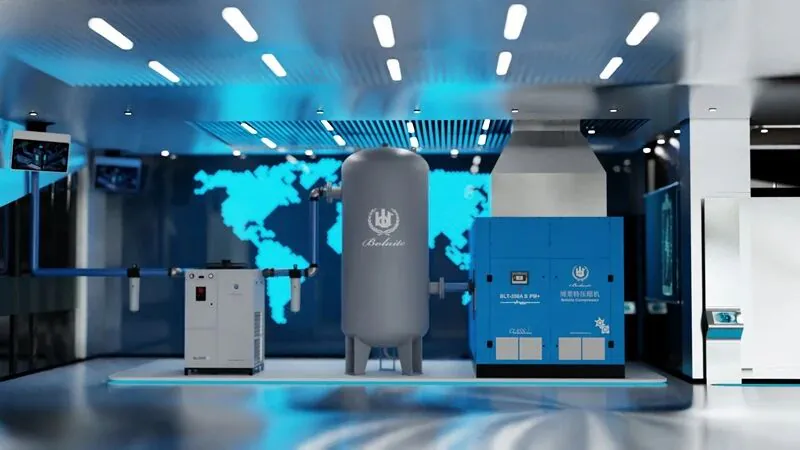
Simply put, an air receiver is a container for storing compressed air, acting as the system’s “temporary grain storage” and “buffer pad.”
Many people ask: Can we skip the air receiver and have the compressor supply air directly? Theoretically yes, but this would cause the compressor to start and stop frequently — like a car constantly slamming the gas and brake. Not only does this waste electricity, but it also accelerates machine wear. The core role of the air receiver is to “bridge” the compressor and fluctuating air demand, stabilizing pressure and optimizing efficiency.
Air receivers mainly fall into two categories, with big functional differences — choosing the right one is key to maximizing benefits:
- Wet air receiver: Stores “untreated compressed air” and is placed before the air dryer. It helps remove moisture and condensed water from compressed air, suitable for scenarios with low air quality requirements (e.g., supplying simple pneumatic tools).
- Dry air receiver: Stores “treated compressed air” and is placed after the compressor + dryer. It ensures the air delivered to the downstream is clean and dry, ideal for air-quality-sensitive scenarios (e.g., precision instruments, food processing).
Stable Pressure: No More “Fluctuating Air Supply”
Compressed air demand inevitably has “peak periods.” Without an air receiver, pressure drops sharply at peaks (causing insufficient tool power), and surges at low demand (wasting energy).
The air receiver acts like a “reservoir”: it releases stored air during peaks and stores excess air during troughs, keeping system pressure stable and ensuring equipment runs smoothly.
Energy Saving & Electricity Cost Reduction
Frequent compressor start-stops are a “power hog” — startup current surges, and repeated loading wastes energy. The air receiver reduces start-stop frequency, letting the machine “work steadily.” This not only saves electricity but also cuts power costs.
Moisture Removal: Protect Equipment from Corrosion
Compressed air generates heat and moisture during compression. Over time, this leads to rust and corrosion in pipes, valves, and tools, shortening their lifespan. The air receiver acts as a “secondary cooler”: compressed air cools down while resting in the tank, releasing moisture. When paired with a dryer, it further improves air dryness and reduces equipment failures.
Extend System Lifespan: Reduce Machine “Strain”
Without an air receiver, the compressor must constantly handle pressure fluctuations — equivalent to “overworking,” which easily causes component wear and breakdowns. The air receiver buffers pressure shocks, reducing the load on the compressor and other components, making the entire system more durable and cutting maintenance costs.
To Keep Your Air Receiver Long-Lasting & Safe: 3 Maintenance Tips
- Regular drainage: Open the bottom drain valve daily or periodically to remove accumulated water, preventing internal corrosion (especially critical in humid environments).
- Damage inspection: Check monthly for external deformation or leaks; conduct an annual internal inspection to identify rust or weld issues.
- Safety valve testing: Regularly verify that the pressure relief valve is responsive, ensuring it releases pressure promptly when overpressurized to avoid safety hazards.
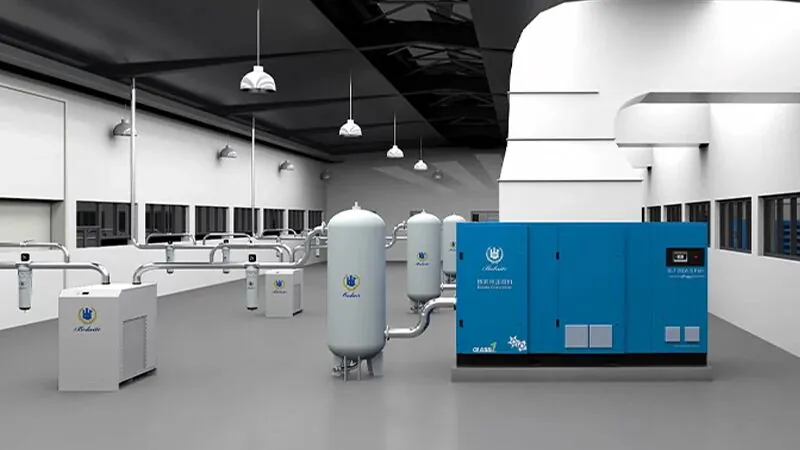
Air receivers mainly fall into two categories, with big functional differences — choosing the right one is key to maximizing benefits:
- Wet air receiver: Stores “untreated compressed air” and is placed before the air dryer. It helps remove moisture and condensed water from compressed air, suitable for scenarios with low air quality requirements (e.g., supplying simple pneumatic tools).
- Dry air receiver: Stores “treated compressed air” and is placed after the compressor + dryer. It ensures the air delivered to the downstream is clean and dry, ideal for air-quality-sensitive scenarios (e.g., precision instruments, food processing).
Stable Pressure: No More “Fluctuating Air Supply”
Compressed air demand inevitably has “peak periods.” Without an air receiver, pressure drops sharply at peaks (causing insufficient tool power), and surges at low demand (wasting energy).
The air receiver acts like a “reservoir”: it releases stored air during peaks and stores excess air during troughs, keeping system pressure stable and ensuring equipment runs smoothly.
Energy Saving & Electricity Cost Reduction
Frequent compressor start-stops are a “power hog” — startup current surges, and repeated loading wastes energy. The air receiver reduces start-stop frequency, letting the machine “work steadily.” This not only saves electricity but also cuts power costs.
Moisture Removal: Protect Equipment from Corrosion
Compressed air generates heat and moisture during compression. Over time, this leads to rust and corrosion in pipes, valves, and tools, shortening their lifespan. The air receiver acts as a “secondary cooler”: compressed air cools down while resting in the tank, releasing moisture. When paired with a dryer, it further improves air dryness and reduces equipment failures.
Extend System Lifespan: Reduce Machine “Strain”
Without an air receiver, the compressor must constantly handle pressure fluctuations — equivalent to “overworking,” which easily causes component wear and breakdowns. The air receiver buffers pressure shocks, reducing the load on the compressor and other components, making the entire system more durable and cutting maintenance costs.
To Keep Your Air Receiver Long-Lasting & Safe: 3 Maintenance Tips
- Regular drainage: Open the bottom drain valve daily or periodically to remove accumulated water, preventing internal corrosion (especially critical in humid environments).
- Damage inspection: Check monthly for external deformation or leaks; conduct an annual internal inspection to identify rust or weld issues.
- Safety valve testing: Regularly verify that the pressure relief valve is responsive, ensuring it releases pressure promptly when overpressurized to avoid safety hazards.